
 All articles
Prescribing masterpieces
Not instead of medicine. Next to it.

Elizabeth Markevitchfounder of ikonoTV
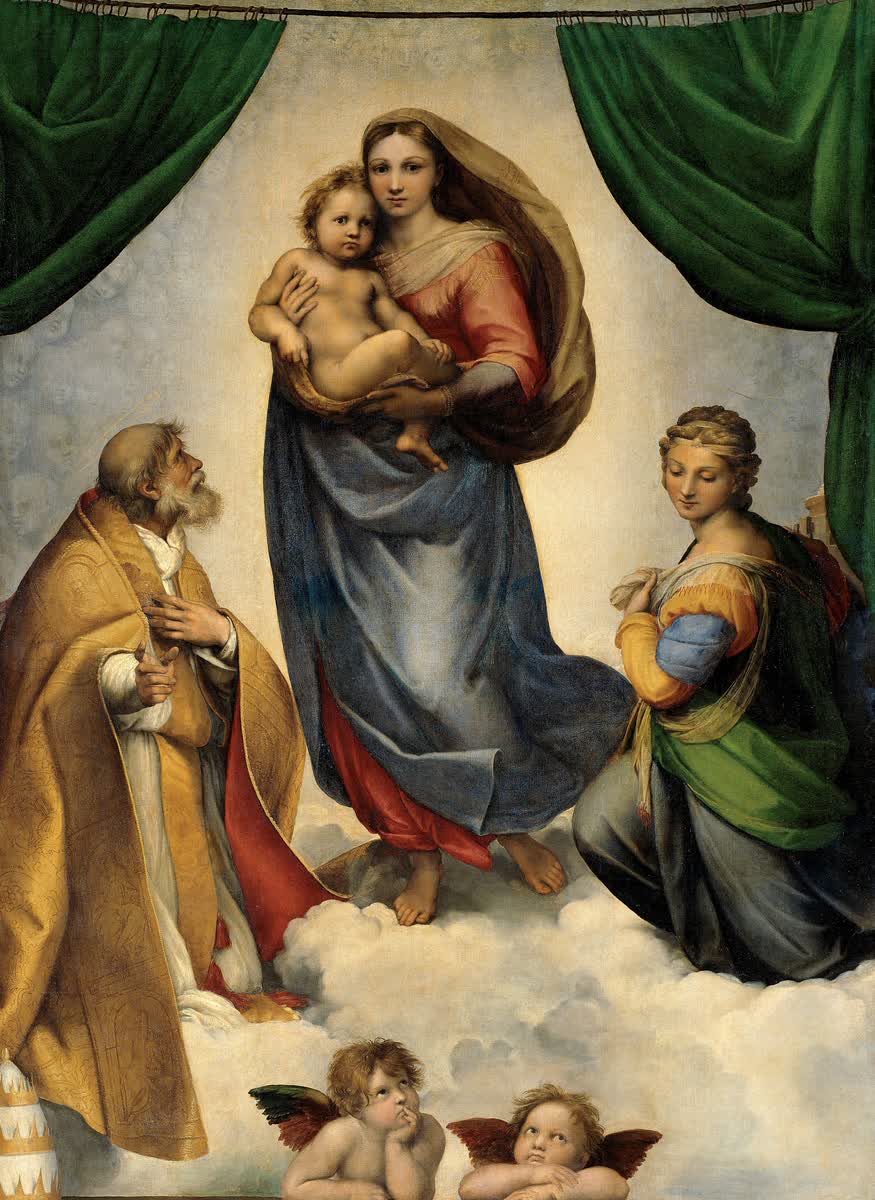
The Sistine Madonna, Gemäldegaelrie Alte Meister, Dresden
In Dresden, Germany, there is a team of doctors and researchers who took people who have dementia to the museum. They also took them with some family members who take care of them, and wanted to find out what would happen, if anything.
I discovered this through a talk by Dr. Michael Wächter, who is a physician but also an art historian. I heard him on 17 September at the social prescribing conference at the Charité in Berlin, which was hosted by Professor Wolfram Herrmann, who now leads SP-EU, a European research project funded by the EU. Wächter was incredibly passionate and determined, and it was really exciting. He was eager to share his findings. He and his team found 58 pairs through GP practices, radio, newspapers, and even screens in the trams. In each pair, one person had mild to moderate dementia and was living at home, and most of them were couples.
Stepping into the gallery
They did the experience in three museums of the Staatliche Kunstsammlungen Dresden: the Old Masters Picture Gallery, the Albertinum, and the Residenzschloss, which is the famous home of the Green Vault. They went five times over eight weeks, and half of them were accompanied by a museum educator in small groups, while the other half went on their own.
What is interesting is that they were not giving art history lectures. They were really asking people to talk about their feelings and questioning them about things like, “How is it in your family?” He said it could work, funny enough, in front of the Raphael Sistine Madonna, but also in front of an abstract work of art. What they found was that the mood was rising compared to just before the visits, whether they were guided or not.
Six months later, most of those who answered had enjoyed the visits very much, and over half of those without a guide would have liked one. Wächter said that, nevertheless, the main goal, which was to have less strain on the carers, was not reached. Still, the researchers called the visits a possible, valuable addition to dementia care. If it works for dementia, I believe that it could work for many other things.
Looking forward
When the visits were over, the pairs received an annual museum pass as a thank-you. One of the pairs even wrote in a message that they are taking the train and the bus again.
The positive point out of this is that the trainings for the museum staff are now going to be all across Saxony, as they got some funding. They also asked the participants if there was anything else they would like to do, and they expressed their wish to sing, make music, draw, paint, and maybe go to the theatre.
During this conference, there was something I wanted to add, which was that we forget that art is done only by humans. We are the only ones making art. Animals don’t make art, so the question would be: why don’t policymakers ask us, “Why do we make, or why do we need, art?” Even in the closing panel of this conference, the title was “Social prescribing: nice to have, or a core part of future primary care?” Of course, for those who know me, they know that art is not, for me, a nice-to-have; it is a must. Nobody is saying that it should be instead of medicine, but it should definitely find its space next to it, which could maybe diminish the intake of some kinds of medicine. Wächter said that he was not an enemy of pharmacology, but he would just like us to think about art too. He even had fun showing on the screen, as a symbol, a kind of fake prescription.
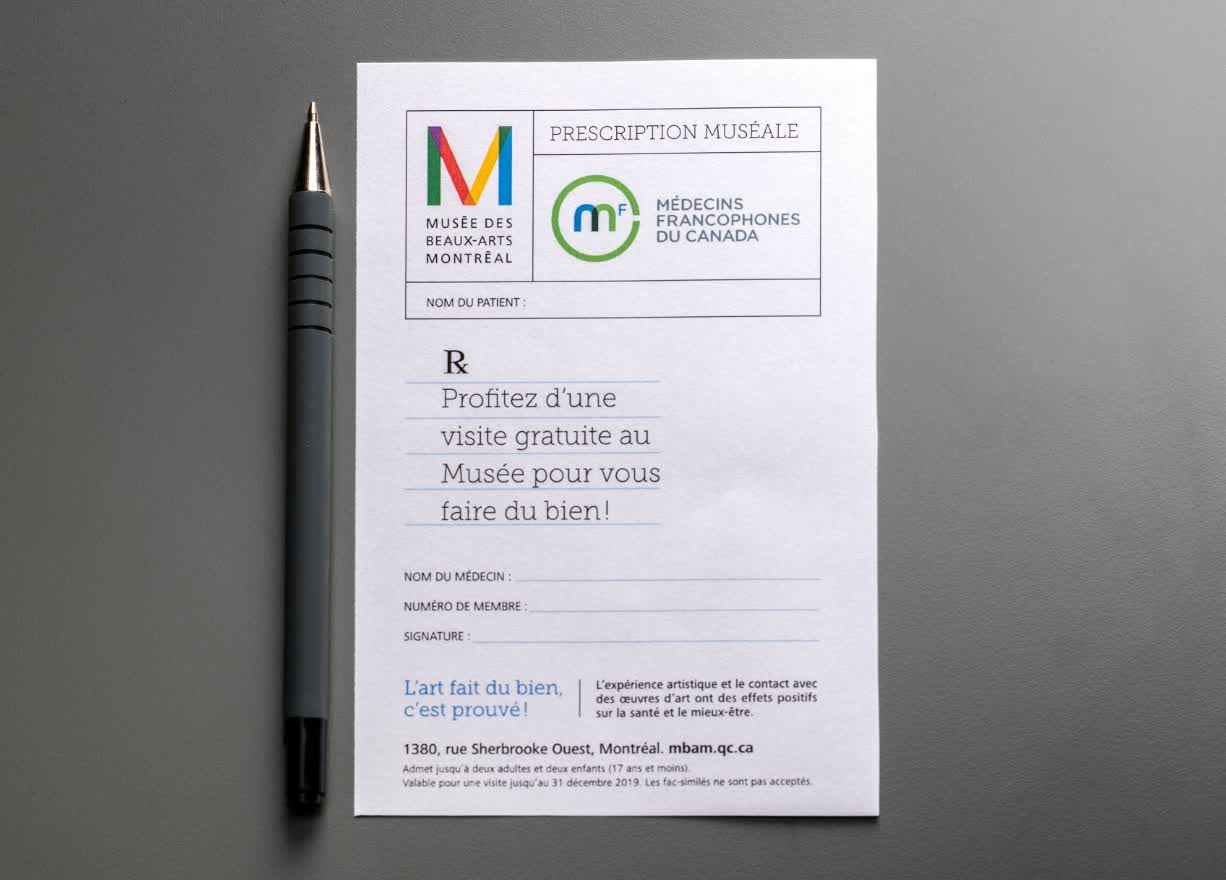
For the purpose of this article, I went back to the story of this experience, which, for me, started in Montreal in 2018, when Nathalie Bondil was the director of the Montreal Museum of Fine Arts. She did set up a one-year pilot with an association of French-speaking doctors, and each slip was for a free visit for up to two adults and two children, for patients that a doctor thought would need it. The museum called it the first initiative of this kind in the world, and it ran for several years. On the prescription, which was a written museum prescription, it said: “Enjoy a free visit to the museum to feel good.”
We really have to find ways to convince policymakers to see how easy it is to make people feel good, and not only the happy few. If suddenly we were, from one day to another, without any culture around us, we would all go crazy.