Menu
Menu


 TV
Meditation
Spaces
Vision
Get in Touch
TV
Meditation
Spaces
Vision
Get in Touch
Sign Up For Updates
On Our Latest Endeavours
By subscribing, I agree to Markevitch
Media's Terms
and Privacy
Policy.
Follow Us


Install Mobile Apps


Sentiko is the emotional barometer: a live evaluation tool for cultural institutions that records what visitors felt, in the room, the same day. The audience answers with a tap on their own phone, and the institution sees the readings as they come in. It sits alongside attendance figures and audience surveys. It does not replace them.
Sentiko tells you what your public left with, the same day, while it is still warm.
Sentiko is the only live evaluation tool purpose-built for cultural institutions. Complementary to what the field already uses, not a replacement. Even silence is a reading. Evaluation, not research.
Sentiko tells you what those who tapped said they left with, while it is still warm.
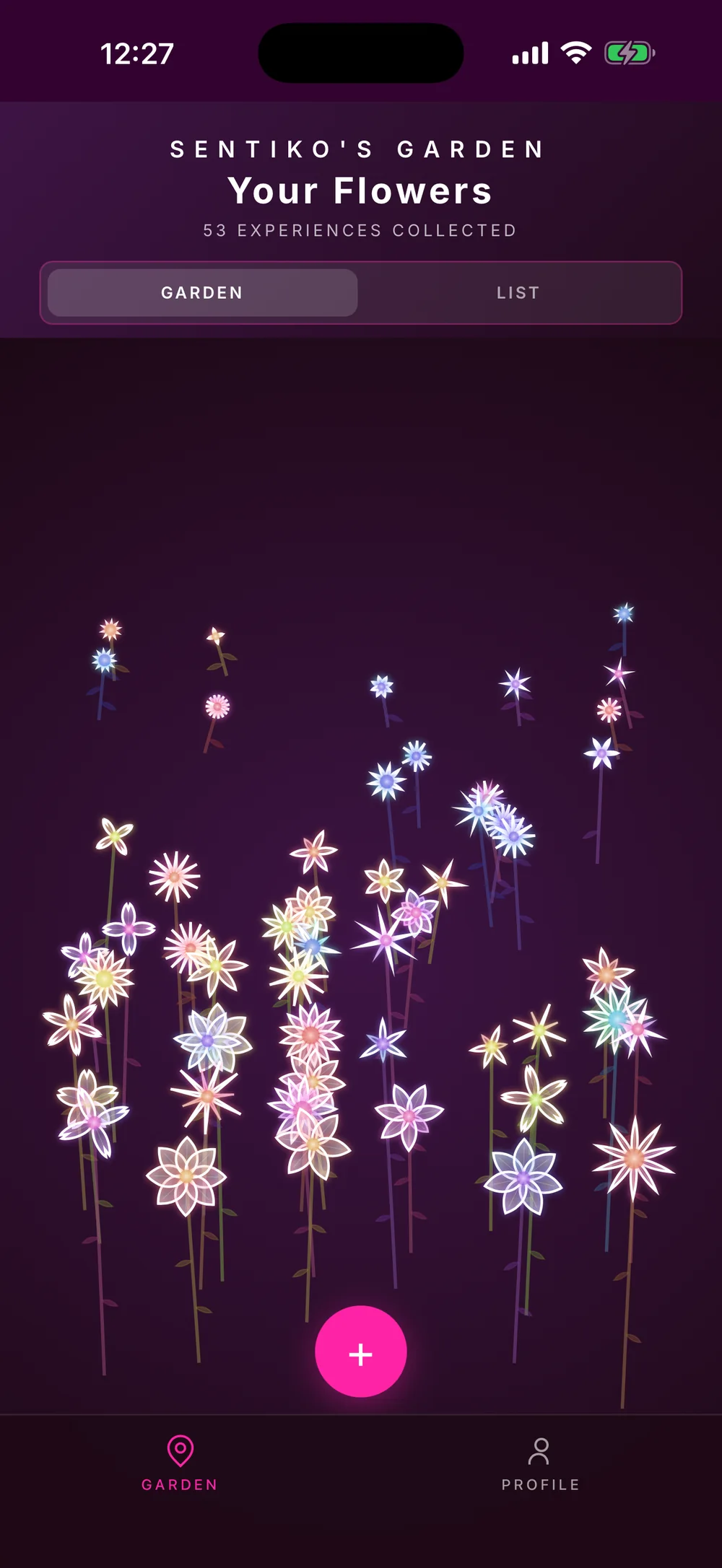
The audience scans, the institution sees the garden grow.
Stars measure satisfaction. The flower measures transformation. Every institution already counts the cold side, and Sentiko adds the human read, same day, in the room.
In 1948, in the long shadow of a war that had burned books, banned jazz, and branded modern art degenerate, the world wrote the arts into the Universal Declaration of Human Rights. Article 27: everyone has the right freely to participate in the cultural life of the community, to enjoy the arts. Seventy-eight years on, it is one of the only human rights with no mechanism to check whether it is actually being delivered. We declared that art belongs to everyone, and then never built the instrument to see whether it reached anyone. Sentiko is that instrument.
Generic Learning Outcomes, Culture Counts, and the Impact & Insight Toolkit have done the long work. Sentiko sits alongside them, with one signal it adds: structured affective response, in the room, while it is still warm.
Mazzucato argues that public value is created through collective, deliberative reasoning, not delivered by a single metric.
Sentiko contributes one input to that reasoning. It does not replace the conversation.
Documents the role of the arts in health, illness, and recovery, and calls for stronger evidence at population and audience scale.
Sentiko offers one audience-scale signal that sits alongside this evidence, not in its place.
In 2022, 150 UNESCO Member States affirmed culture as a global public good and called for stronger instruments to measure its impact on sustainable development.
Sentiko offers one audience-scale signal that sits alongside this evidence, not in its place.
Twenty-five years ago, I started asking what art actually does to people. Museums wanted proof. Festivals wanted numbers. Policy makers wanted evidence. So we built the tool. And then we saw the truth. The person who needs it most is the one sitting in the seat.
Most of us have lost the habit of asking how we feel. We scroll. We react. We keep moving. Sentiko is a small protest against that, fifteen seconds at a time. It belongs to the institutions that fund culture. It belongs more to the human being they funded it for.
Elizabeth Markevitch, founder, Sentiko
The world got very good at measuring attention and never learned to measure emotion. For a hundred years we asked a room only one question: did they look? Clicks, views, dwell time, stars. Every one of them is a visual receipt. It proves time was spent. It says nothing about what that time was worth. Measuring a room by attendance is like measuring a meal by calories. A burger and a salad weigh the same on the spreadsheet. The counter tells you volume, never nourishment. Sentiko measures the nourishment: not how many came, but whether the work fed anyone.
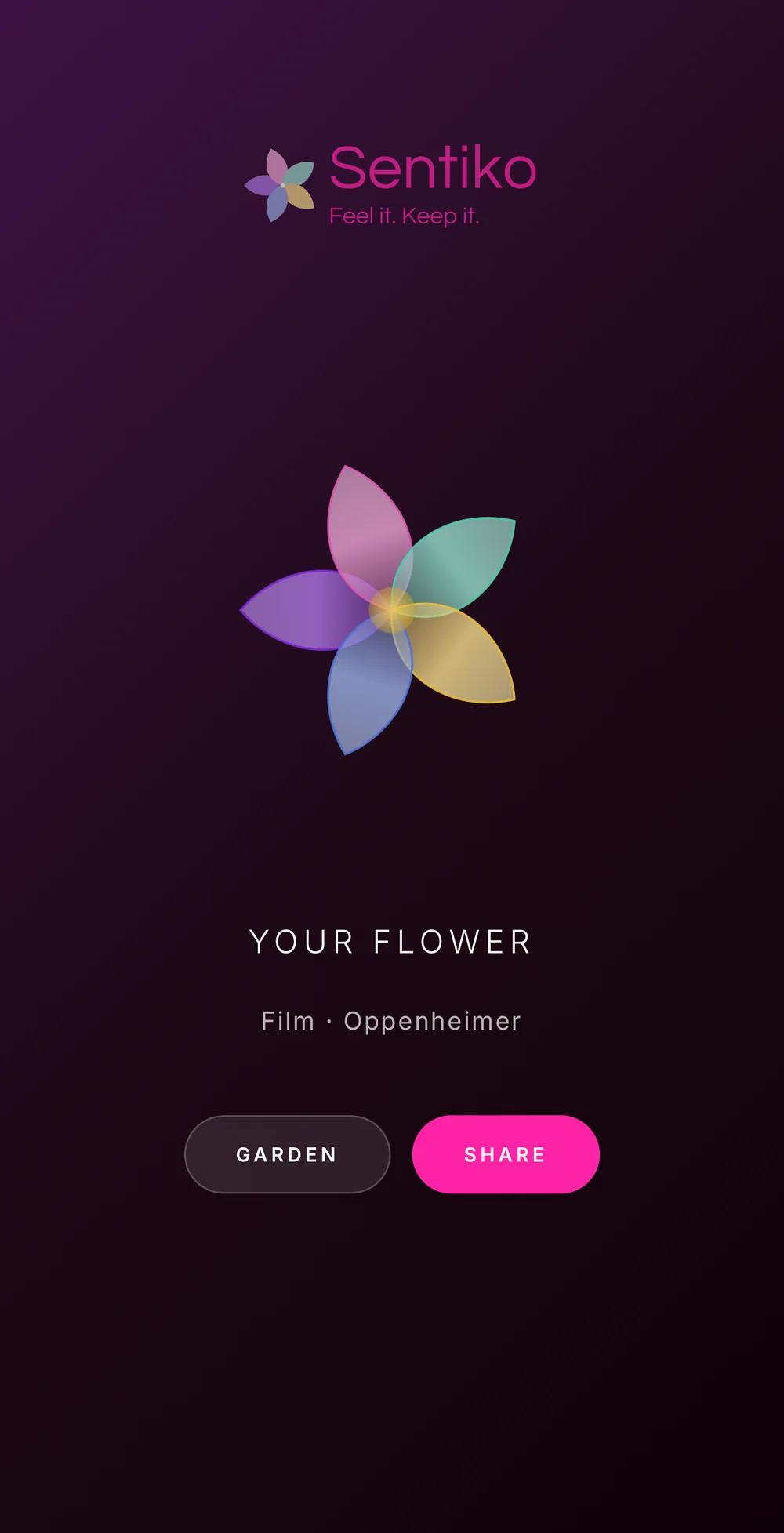
These are not survey questions. They are the conditions any cultural moment has to meet to land, last, and travel. Sentiko reads all five, in the room, while it is still warm. Each one is a petal. Together they are the bloom.
The first visceral hit, before the thinking brain catches up.
The reaction that stops the scrolling thumb and pulls you into the room.
The lens moves. You see the thing differently, and you cannot unsee it.
You feel a tether to whoever made the shift. You feel seen.
You cannot keep a real shift to yourself. You pass it on, and passing it on is the proof.
The agencies that survey audiences measure too. They measure the why, with analysts, weeks after the room has emptied. Sentiko measures something else: the gut, live, in the seat, in the hand of the person who felt it. A survey asks you to explain yourself, to rate it and justify it, and that is slow, and it drags you out of the feeling and into your head. Sentiko asks one thing: what did you feel? A tap, not an essay. We are not claiming science. Art is gut before it is intellect, and Sentiko stays there on purpose. It is the first live instrument the audience uses on itself, in the moment, and that is exactly why anyone can.
The fair objection is that you cannot systematize feeling, that the moment you name it you flatten it. We think the opposite. Being moved usually feels like an accident, a stroke of luck you stumble into. The five petals give that accident a vocabulary, and a vocabulary makes it findable. An institution can stop waiting to be struck by lightning and start building the conditions for it on purpose. This is not a replacement for feeling. It is a map for finding it, and a garden anyone can learn to grow.
A survey asks people to explain themselves, weeks later, in writing. Sentiko asks what you felt, in the room, on the same day: five yes or no taps, not an essay. It captures the gut reaction before the thinking brain tidies it up. It is evaluation, not research, and it sits alongside the surveys you already run.
A live reading of how the work landed. For each event, how many of the visitors who answered said yes to each of the five questions, the same day rather than a quarter later. Attendance tells you they came. Sentiko tells you what those who answered said they left with. It is one more layer next to the frameworks you already use.
Sentiko asks the visitor what they felt, not who they are. It asks for no name, no email address and no sign up. What the institution sees is how the room responded, not a list of names. The comment box at the end is optional free text, so please leave names and contact details out of it.
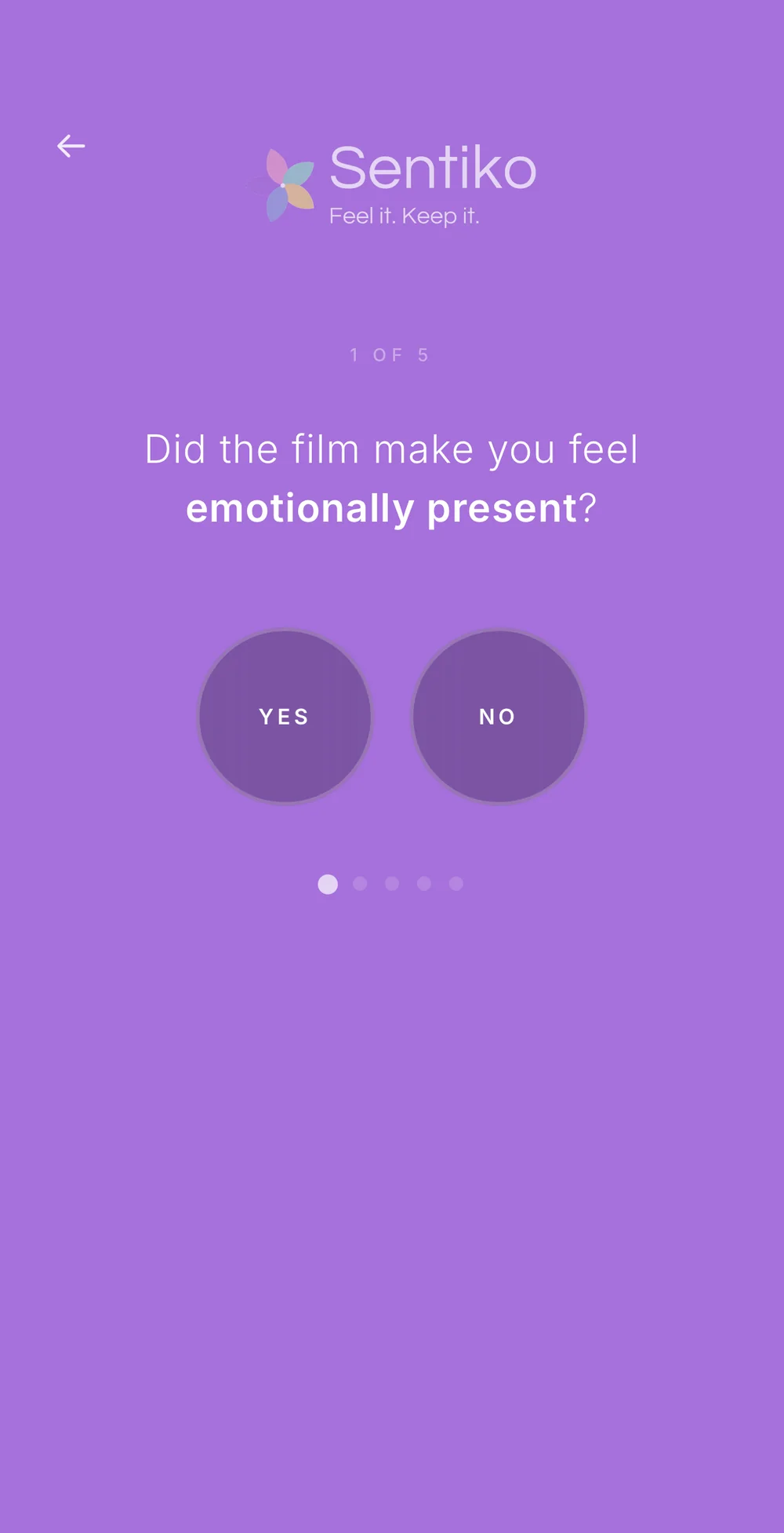
Fifteen seconds in total, three for each question, answered on instinct. The visitor scans a code, answers five yes or no questions, and is done. It is designed to be shorter than the walk to the exit, so it catches the reaction while it is still warm rather than asking for it a week later by email.
Pricing is set per institution and per event on a demo call, because a festival weekend and a year-round museum are not the same job. There is no public price list. Book a demo and our team calls you back, with no sales script.
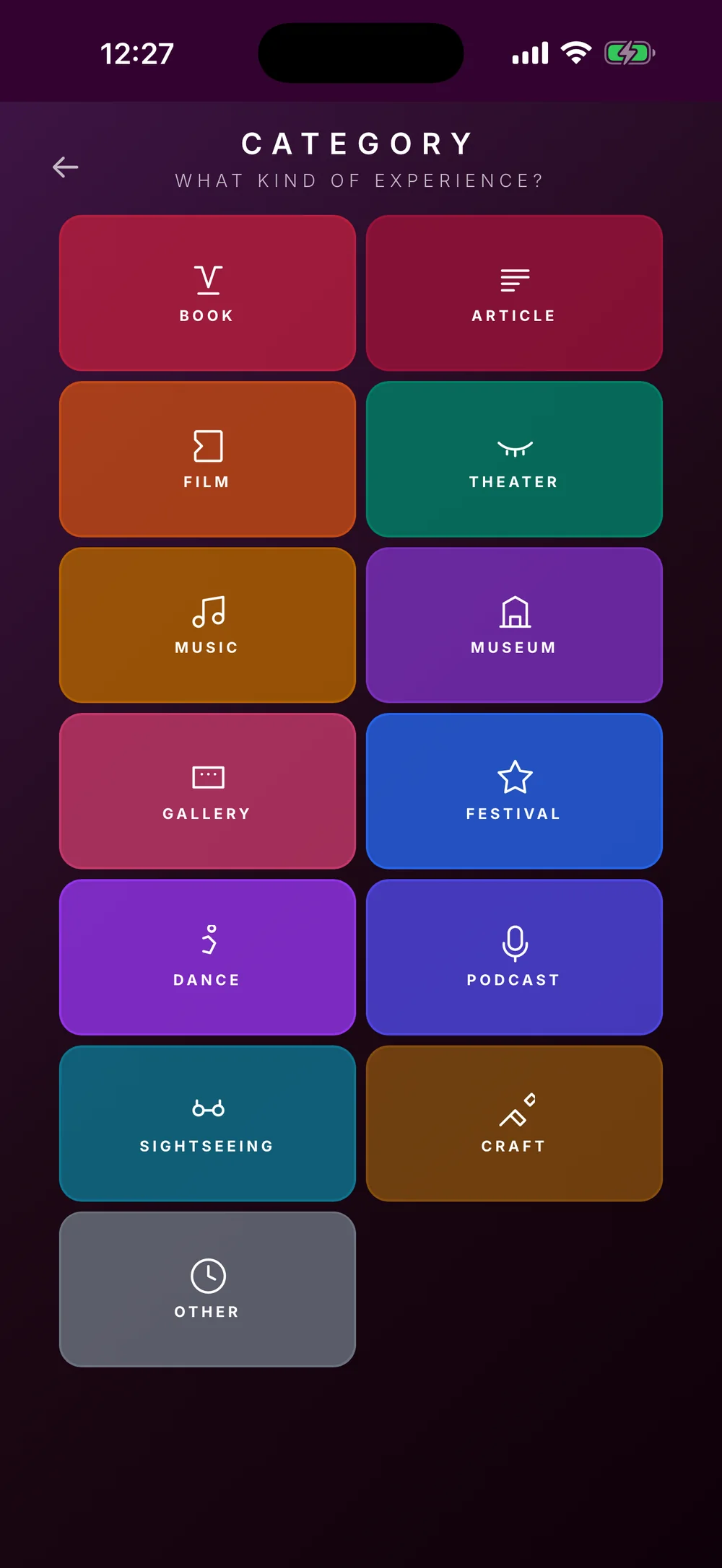
In the room, on the visitor's own phone. The audience scans a code and answers in the Sentiko app, available on the App Store and Google Play. The institution sees the readings come in the same day. It runs at exhibitions, performances, festivals and any cultural event where people leave with a feeling.
Try Sentiko after the next thing that moves you. Fifteen seconds. A bloom you keep, and a clearer picture of who you are.