
 All articles
Art Is Infrastructure. Artists Are Navigators.

Elizabeth Markevitchfounder of ikonoTV
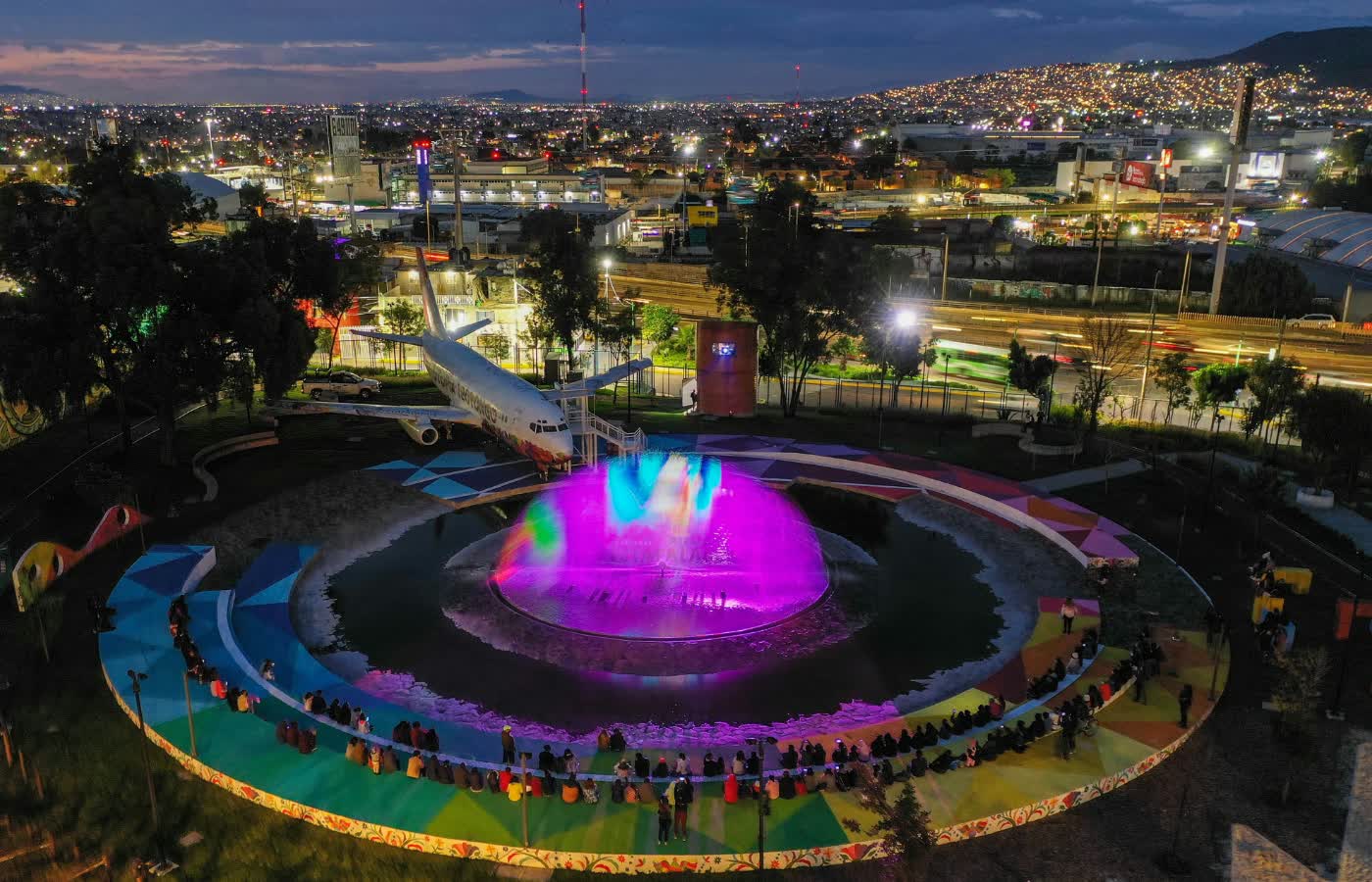
The UTOPÍAS of Iztapalapa, Mexico City
Economist Mariana Mazzucato makes the case for cultural investment
Imagine a village where the builders keep building, the merchants keep trading, the officials keep regulating, but the artists are missing.
At first, everything might look orderly. Houses stand. Roads function. Trade flows.
But slowly, something happens. People stop gathering in the square. Imagination shrinks. Shared meaning thins. And when a crisis strikes, the village realizes it has been navigating without visionaries.
This is where our societies find themselves today. We are flooded with crises, climate breakdown, inequality, and disconnection, yet we have pushed our artists to the margins. Their work is dismissed as luxury, as decoration, as “nice to have.”
Mariana Mazzucato’s paper, The Public Value of Arts and Culture (UCL Institute for Innovation and Public Purpose, 2025), is a clarion call to reverse this mistake. She argues that art and culture are not peripheral to our economies. They are essential infrastructure for reimagining growth, building resilience, and fostering thriving communities.
And I can’t agree more. At the end of the day, we cannot afford a village without its artists.
What Mazzucato Argues
Mazzucato speaks as an economist. She knows policymakers want ROI, GDP, and multipliers. So she reframes the case for culture in terms they recognize:
- Arts and culture shape the direction of growth, not just its rate.
- Creative industries are economic powerhouses , 3.1% of global GDP, 6.2% of employment (UNESCO, 2022).
- Investing in culture produces spillovers: jobs, education, wellbeing, and innovation.
- History proves it: Bauhaus, the WPA, and Mexico City’s Utopias.
Her message is powerful: culture is not a luxury. It is a public value.
Let’s go from Artworks to Artists
But here is where I want to go further.
Mazzucato focuses on artworks, institutions, and ecosystems. She shows brilliantly how culture as a sector fuels innovation and resilience.
Yet if art is infrastructure, then surely artists themselves are part of that infrastructure.
Not just as producers of outputs (paintings, plays, designs). But as decision-making partners.
This is my addition to Mazzucato’s call:
- Artworks matter. But so do the artists.
- Museums matter. But so do philosophers.
- Cultural spillovers matter. But so do the writers who can reframe our collective story.
The medieval village kept its artists in the square, not because they produced entertainment, but because they helped the community imagine survival. Why shouldn’t today’s boardrooms and cabinet rooms do the same?
Lessons From History: Beauty as Strategy
History shows what happens when culture is taken seriously as infrastructure.
- The Bauhaus (Germany, 1919): A state-funded movement that fused art, craft, and design. Bauhaus artists and architects reimagined how we live and connect, reshaping everything from furniture to housing to urban planning.
- The Works Progress Administration (United States, 1930s): In the depths of the Great Depression, Roosevelt’s New Deal employed thousands of artists, writers, musicians, and architects. The result was not only murals, plays, and symphonies, but renewed community, resilience, and hope.
- Mexico City’s Utopias (2019): In Iztapalapa, (see image above) one of the city’s most marginalised boroughs, Clara Brugada, then its mayor, launched multifunctional centers where health, culture, and education converge. They are places where beauty, care, and imagination rebuild trust and civic pride.
These moments were not charity. They were a strategy.
And if it worked then, why not now?
The Wrong Direction: Austerity and the Hollowing Out of Culture
Yet despite these lessons, arts and culture are consistently the first casualties of austerity.
Between 2009 and 2023 in England, local authority spending per person on culture fell by 48%. Across the OECD, public funding for culture was still stuck at pre-2008 levels around 2019, even as total government spending had risen.
The result? Artists and cultural organizations are pushed into precarity. Programming shrinks. Communities lose the connective tissue that binds them.
Mazzucato is right: we are dismantling the very capacity we need to face crises.
Reframing ROI for Policymakers
Mazzucato knows policymakers need ROI. But she reframes it:
- Dynamic spillovers: A cultural initiative doesn’t only generate ticket sales. It strengthens education, boosts mental health, fosters tourism, and inspires innovation.
- Direction of growth: Culture gives meaning to numbers. It ensures GDP growth is aligned with social and environmental goals.
- Resilience dividends: Like infrastructure, culture provides long-term capacity. It builds trust, cohesion, and imagination , the things societies draw on in crises.
Here I find strong resonance with Joseph Stiglitz, who has long argued that GDP is a poor measure of progress. What we truly need, his 2009 report with Sen and Fitoussi says, is several measures beside GDP, not one number. I would count cultural wellbeing and collective meaning among them, as essential indicators of prosperity.
And artists know this intuitively. As Olafur Eliasson puts it: “I like to think of the cultural sector as listening to you. […] I don’t think culture tells you what to do, but it listens to what you want to do” (2019, in conversation with Mazzucato).
That is the essence of culture’s ROI: not instruction, not prescription, but the creation of spaces where societies can listen to themselves, and from that listening, imagine new futures.
The real ROI of culture is not only what it adds to the balance sheet. It is how it equips societies to survive and thrive.
The Counterpoint: Isn’t Art a Luxury?
Skeptics will say: “But when budgets are tight, shouldn’t we focus on essentials, food, energy, housing?”
Here is the counterpoint: art is part of that survival kit.
When a mural turns a street corner into a place of belonging, crime can drop. When a song mobilizes protest, democracy strengthens. When creative education is integrated into schools, cognitive flexibility increases, and students write better.
Art is not a diversion from survival. It is survival made meaningful.
At the end of the day, societies that neglect culture pay a hidden cost: disconnection, mistrust, apathy. And these are the very conditions that make other crises unmanageable.
The Vision: A New Renaissance
Every day we delay putting creativity back at the center is another day we try to solve complex problems with incomplete tools.
But imagine the alternative. Imagine if ministries of finance declared cultural budgets untouchable. Imagine if every major infrastructure project required an artist’s perspective. Imagine if our towns and cities held their artists at the center, not as entertainers, but as navigators.
The Renaissance must start now.
Mazzucato calls for governments to “invest in cultural ecosystems” and to “place arts and culture at the centre of policy design and industrial strategies”.
And I would add: not only in cultural ecosystems, but also in the ecosystems of power. Let the artist sit next to the policymaker. Let the philosopher share the stage with the economist. Let the poet rewrite the terms of the deal.
This is not nostalgia. It is a necessity.
Artists are not marginal. They are essential.
They help us imagine ships before we build them, to borrow Saint-Exupéry’s words. They help us yearn for seas we cannot yet see.
Mazzucato reminds us that art is infrastructure. Stiglitz reminds us that GDP alone cannot measure wellbeing. Eliasson reminds us that culture listens before it speaks. And I would add: artists are navigators.
If we want to navigate the storms of our century, climate, inequality, and fragmentation, we must bring the artists back to the square.
Not for decoration, for survival.
Sources
- Mariana Mazzucato, The Public Value of Arts and Culture: Investing in Arts and Culture to Reimagine Economic Growth in the 21st Century, UCL Institute for Innovation and Public Purpose, 2025.
- Joseph Stiglitz, Amartya Sen, Jean-Paul Fitoussi. Report by the Commission on the Measurement of Economic Performance and Social Progress (2009).
- Olafur Eliasson, “TRUST”, conversation with Mariana Mazzucato, in Olafur Eliasson: In Real Life, Tate (2019).
- UNESCO (2022). Re|Shaping Policies for Creativity: Addressing Culture as a Global Public Good.
- Campaign for the Arts & University of Warwick (2024). The State of the Arts.